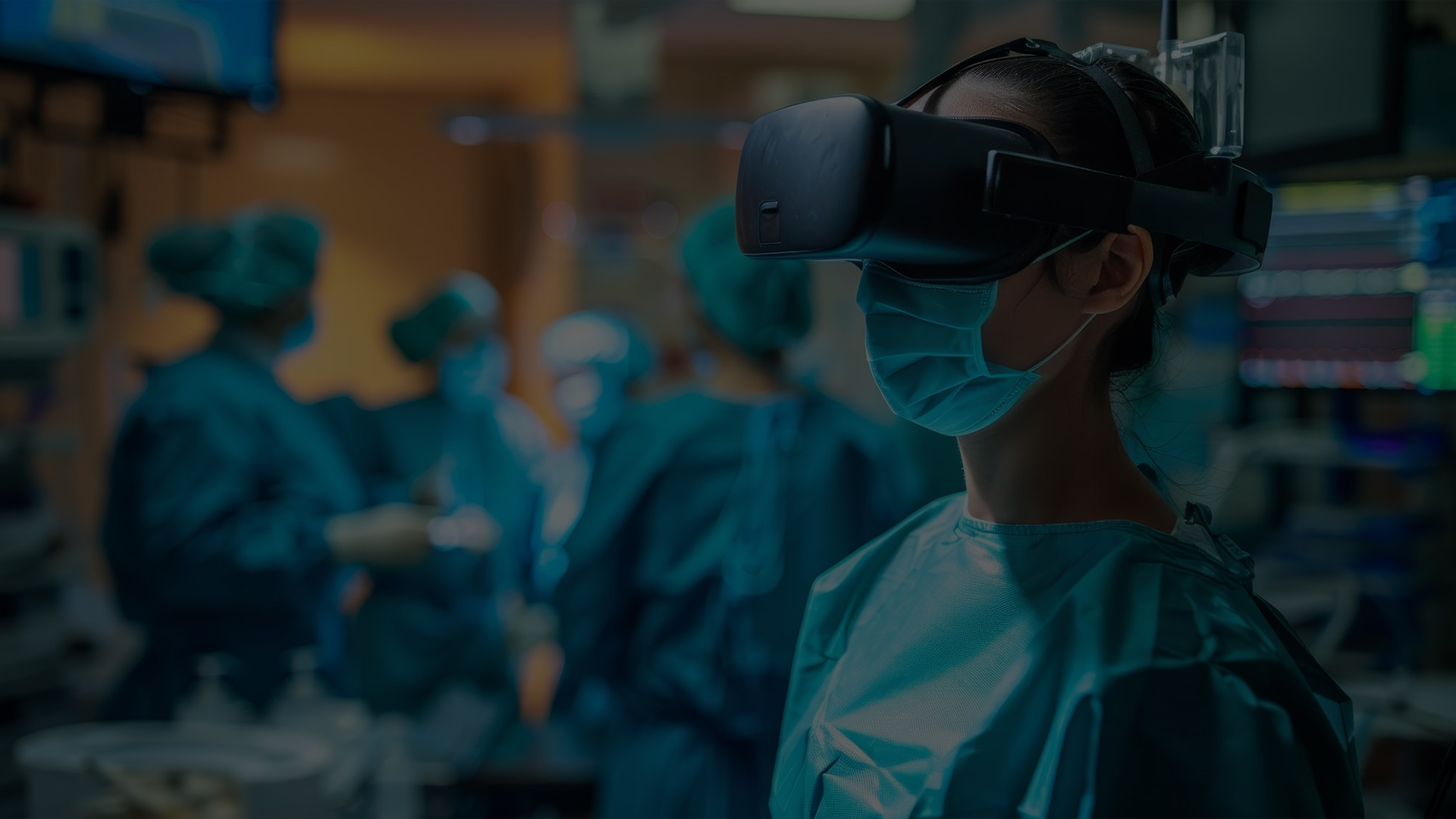
How Is Virtual Reality Transforming Healthcare and Medical Training?
Imagine reducing a patient’s perception of pain without increasing medication or allowing surgeons to practice complex procedures without putting patients at risk. With Virtual Reality (VR), these possibilities are becoming part of modern healthcare.
Once associated primarily with gaming and entertainment, Virtual Reality (VR) has evolved into a valuable technology for healthcare. Hospitals, rehabilitation centers, and medical schools are exploring VR to support patient care, enhance medical education, and expand access to certain forms of therapy and training. From pain management and physical therapy to surgical simulation and remote learning, VR is changing how healthcare is delivered worldwide.
What Is Virtual Reality in Healthcare?
Virtual Reality in healthcare refers to the use of immersive, computer-generated environments that allow patients and healthcare professionals to interact with realistic digital simulations. Using VR headsets, motion tracking, and other interactive technologies, users can engage with simulated environments designed for therapy, rehabilitation, education, or clinical training.
The technology creates safe, controlled, and interactive experiences that support both patient care and professional development.
How VR Is Supporting Patient Care
1. Pain Management
One of the most successful healthcare applications of VR is pain reduction. During procedures such as burn treatment, wound care, or injections, patients can be immersed in relaxing virtual environments that distract the brain from discomfort.
Research shows that immersive experiences can significantly reduce perceived pain and anxiety, improving the overall treatment experience.
2. Rehabilitation and Physical Therapy
Rehabilitation often requires repetitive exercises that can become frustrating over time. VR transforms these exercises into interactive games that encourage patients to stay motivated throughout recovery.
Modern VR rehabilitation systems can provide:
- Real-time motion tracking
- Personalized exercise programs
- Progress visualization
- Adaptive difficulty levels
These features make therapy more interactive while improving patient engagement and treatment adherence.
3. Mental Health and Cognitive Therapy
VR has become an effective tool for treating psychological conditions and supporting cognitive recovery.
Some common applications include:
- Exposure therapy for phobias and anxiety disorders
- VR-assisted PTSD therapy
- Stress reduction and relaxation exercises
- Memory and attention training following neurological injuries
- Cognitive rehabilitation for stroke or traumatic brain injury patients
Because sessions take place in controlled virtual environments, therapists can safely tailor treatments to each patient’s needs.
How VR Is Transforming Medical Training
VR’s applications extend beyond direct patient care. The same immersive technology is also changing how healthcare professionals learn, practice, and prepare for real-world clinical situations.
Surgical Simulation
VR enables surgeons and medical students to practice complex procedures repeatedly without risking patient safety. Advanced systems offer realistic surgical simulations, while some include haptic feedback that mimics the feel of real surgical instruments. Surgeons can even rehearse operations using patient-specific imaging before entering the operating room.
Anatomy Education
Instead of relying only on textbooks and cadavers, students can explore the human body through interactive 3D environments.
They can:
- Rotate organs
- Zoom into tissues
- Separate body systems
- Observe anatomical relationships from different angles
This immersive learning experience improves understanding and knowledge retention.
Clinical Decision-Making
Virtual patients allow medical learners to practice diagnosing illnesses, communicating with patients, and responding to emergency situations. Because these scenarios are repeatable and risk-free, students can gain valuable experience before treating real patients.
Remote Medical Training
VR can also expand access to specialized medical education and training. Experts can teach and mentor students remotely through shared virtual environments, making high-quality training available even in rural and underserved communities.
Challenges of Using VR in Healthcare
Despite its many advantages, VR adoption still faces several obstacles.
- High equipment and implementation costs
- Technical limitations in motion tracking and haptic realism
- Data privacy and cybersecurity concerns
- Resistance to adopting new technologies
- Limited access in low-resource healthcare settings
Addressing these challenges will be essential for wider adoption.
The Future of Virtual Reality in Healthcare
As these barriers are addressed, the next phase of VR adoption will likely focus on making immersive healthcare solutions more personalized, accessible, and easier to integrate into clinical workflows.
Emerging developments include:
- AI-powered personalized therapy
- Home-based virtual rehabilitation
- Cloud-based medical education platforms
- More advanced haptic and multisensory feedback
- Greater accessibility through affordable VR devices
As technology continues to evolve, VR is expected to become an integral part of healthcare delivery worldwide.
Conclusion
Virtual Reality is no longer a futuristic concept; it is already transforming healthcare. By improving pain management, rehabilitation, mental health treatment, surgical training, and medical education, VR is helping create safer, more effective, and more engaging healthcare experiences.
While challenges such as cost and accessibility remain, ongoing technological advances are making VR more practical and widely available. As healthcare continues to embrace digital innovation, Virtual Reality is set to play an increasingly important role in improving patient outcomes and shaping the future of medicine.