How to Choose the Right Web Application Architecture for Your Enterprise
In the modern era of cloud computing, software applications must be designed to efficiently support multiple customers while ensuring data security, scalability, and performance. When evaluating Multi-Tenant vs Single-Tenant architectures, multitenant architecture is a software design pattern that enables multiple tenants (customers or users) to share a single application and infrastructure while maintaining data isolation. This approach allows organizations to optimize resource utilization, reduce operational costs, and simplify maintenance processes.
What is Multitenant Architecture?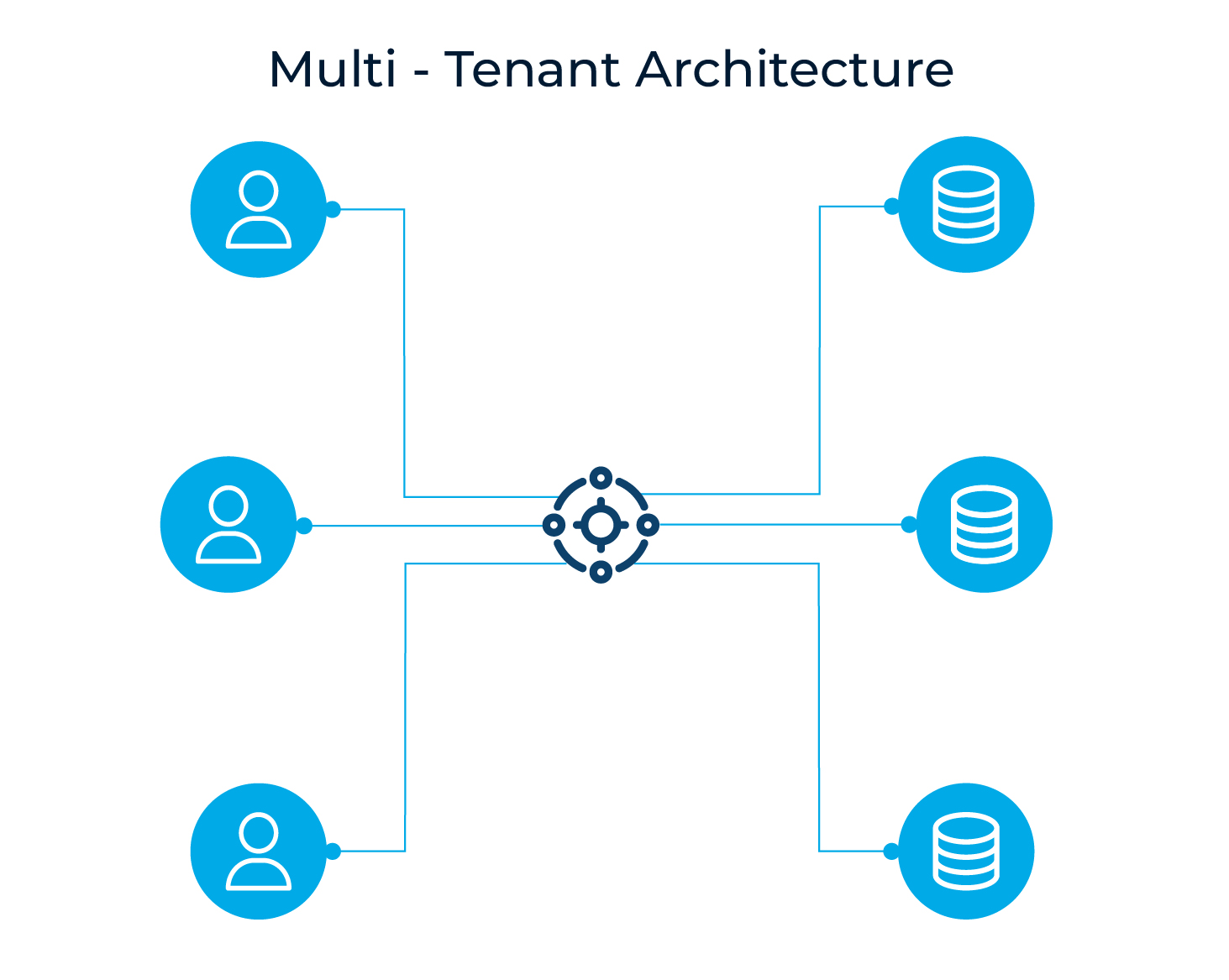
Multitenant architecture is a cloud-based software design in which a single application instance serves multiple customers, commonly referred to as tenants. Each tenant has its own users, configurations, and data, but the core application remains the same. Therefore, businesses can optimize resource utilization while ensuring that each tenant’s data remains isolated and secure.
Key Features of Multitenant Architecture
- Single Codebase: The application runs a single version of the software for all tenants
- Data Isolation: Even though resources are shared, each tenant’s data is kept separate
- Shared Infrastructure: A common database, server, and storage system is used for all tenants
- Customizable Experience: Tenants may have different configurations, settings, or access levels
- Centralized Updates: Organizations can roll out updates and bug fixes centrally across all tenants without requiring individual deployments
Single-Tenant vs Multi-Tenant Architecture
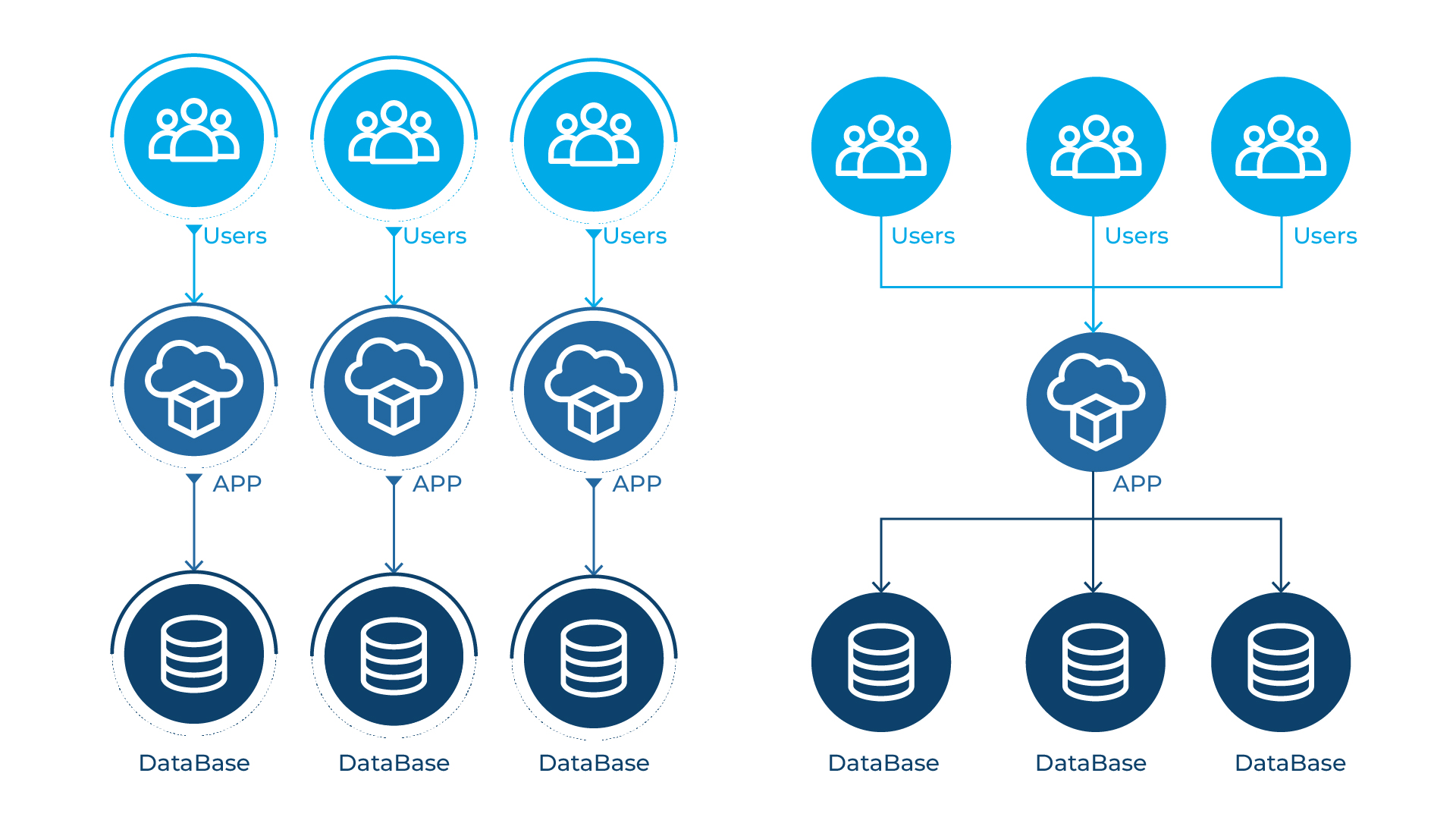
In a single-tenant architecture, each customer uses a dedicated application instance and infrastructure. As a result, organizations gain greater control and isolation. However, this approach increases infrastructure and maintenance costs. In contrast, multitenant architecture allows multiple tenants to share the same application and infrastructure while maintaining logical data separation. Therefore, businesses can achieve better scalability and cost efficiency.
Different Types of Multi-Tenancy
Depending on business requirements, scalability goals, and security considerations, organizations can adopt different multitenancy models.
1. Database-per-Tenant
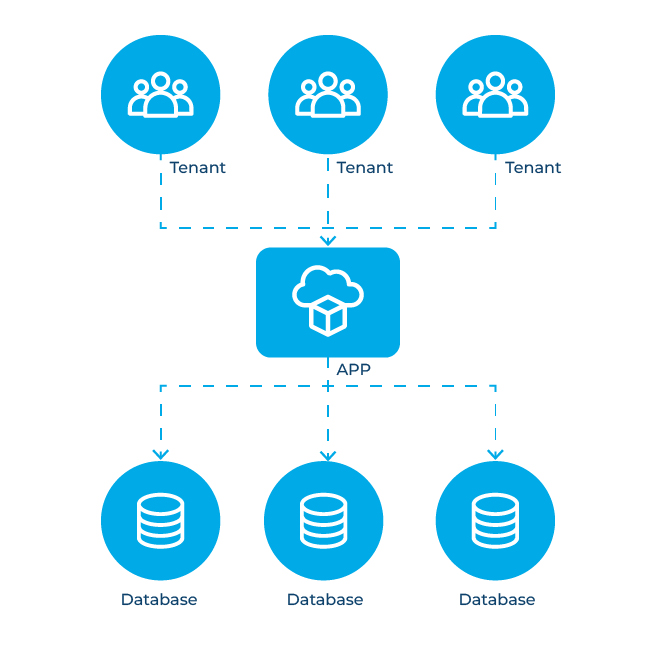 Each tenant has its own separate database. This model provides strong data isolation but requires more infrastructure and maintenance.
Pros:
- Strong data isolation
- Simplified regulatory compliance
- Predictable performance
Cons:
- Higher infrastructure costs
- Complex maintenance and scaling
2. Shared Database, Separate Schemas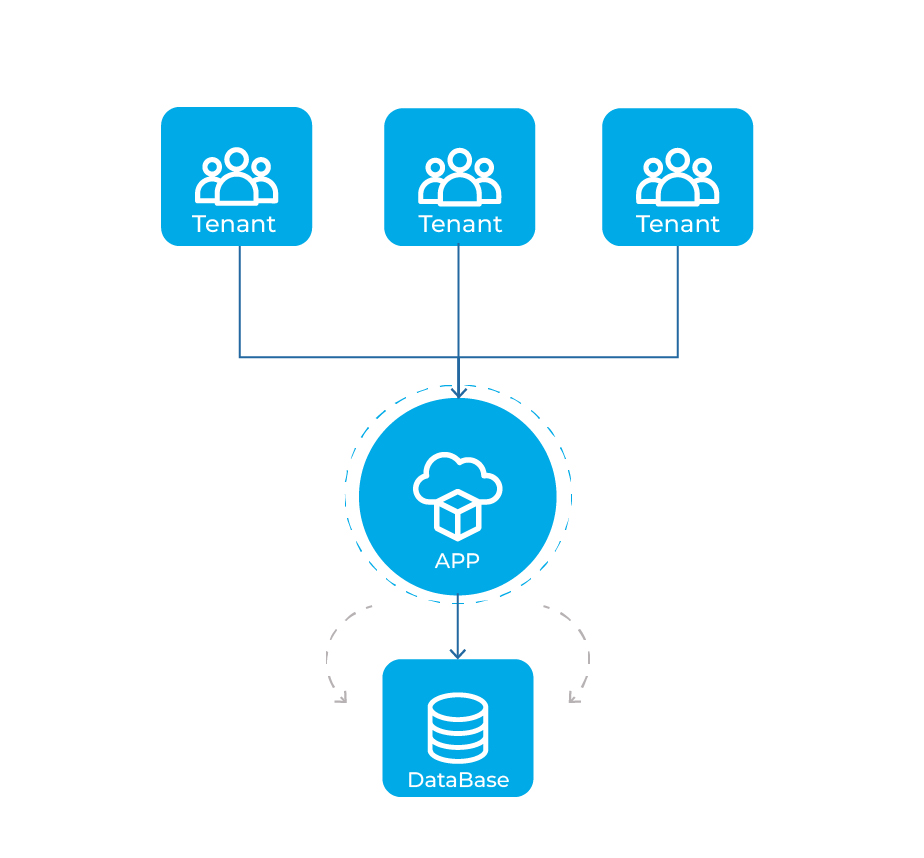
A single database is used, but each tenant has a separate schema within it. Consequently, this model balances isolation and resource efficiency.
Pros:
- Moderate security
- Better resource utilization
- Easier management
Cons:
- It can become difficult to scale as the tenant count increases
- Schema management complexity
3. Shared Database, Shared Schema
All tenants share the same database and schema, making it the most cost-effective approach. However, organizations must implement strict data separation mechanisms to maintain security and compliance.
Pros:
- Best cost efficiency
- Easy to scale
Cons:
- Increased security complexity
- Potential performance contention among tenants
Advantages of Multitenant Architecture
- Cost Efficiency: Since infrastructure is shared, operational costs are significantly reduced
- Scalability: New tenants can be onboarded quickly without setting up separate instances
- Simplified Maintenance: Teams can apply updates, patches, and security fixes across all tenants simultaneously
- Improved Resource Utilization: Optimized use of computing resources leads to better performance and efficiency
- Consistent User Experience: Centralized management ensures that all users get a uniform experience
Challenges and Considerations
- Data Security and Isolation – Strong access control measures are required to prevent data leaks between tenants.
- Performance Bottlenecks – A sudden spike in one tenant’s workload could impact the performance of other tenants in a shared environment.
- Limited Customization – Some tenants may require unique features or configurations that are difficult to implement in a shared setup.
- Compliance Requirements – Regulations like GDPR or HIPAA may require additional security measures for certain tenants.
- Noisy Neighbor Problem – Shared environments can experience resource contention when one tenant consumes excessive compute or storage resources.
- Tenant-Aware Authentication – Proper authentication and authorization mechanisms are required to ensure tenants can access only their own data and services.
Best Practices for Implementing Multitenancy
To ensure an efficient and secure multitenant system, consider the following best practices:
- Use Tenant Identifiers: Ensure all database queries filter by tenant ID to avoid data mix-ups
- Implement Strong Access Controls: Define role-based permissions to prevent unauthorized access
- Optimize Performance: Use caching, load balancing, and indexing to prevent slowdowns
- Encrypt Data: Protect sensitive tenant information with encryption mechanisms
- Automate Tenant Provisioning: Use scripts or Infrastructure as Code (IAC) to quickly set up new tenants
- Regular Monitoring and Logging: Track system performance and security events to detect and resolve issues quickly
Real-World Examples of Multi-Tenancy
Many popular cloud-based platforms use multitenancy to serve their customers efficiently. For example, the following companies rely on multitenant architectures to support large-scale operations:
- Salesforce: One of the pioneers of SaaS, Salesforce uses a multitenant architecture to serve businesses of all sizes
- Microsoft 365: Different organizations use Microsoft’s cloud services while sharing a common infrastructure
- Shopify: E-commerce stores use Shopify’s shared infrastructure while keeping their store data separate
- Google Workspace: Organizations use Gmail, Drive, and other services with isolated tenant data
Conclusion
Multitenant architecture is a highly efficient way to deliver cloud-based applications to multiple customers while optimizing resources, reducing costs, and ensuring seamless updates. However, implementing multitenancy requires careful consideration of security, performance, and data isolation.
By choosing the right multitenancy model and following best practices, businesses can effectively scale their SaaS applications while delivering a secure, reliable, and high-performing experience for all tenants.