
How Does AWS Verified Access Secure Application Access Without a VPN?
AWS Verified Access is emerging as a key solution for organizations seeking secure access to internal applications. As employees, partners, and contractors work from various locations, businesses need stronger security without added complexity. Traditional VPNs enable connectivity but often grant broad network access, increasing security risks and management challenges.
As cloud adoption and distributed work environments continue to grow, organizations are embracing Zero Trust security models. Instead of relying on network location, access decisions are based on user identity, device posture, and security policies. AWS introduced this service to help organizations implement Zero Trust security while simplifying secure application access and improving overall security.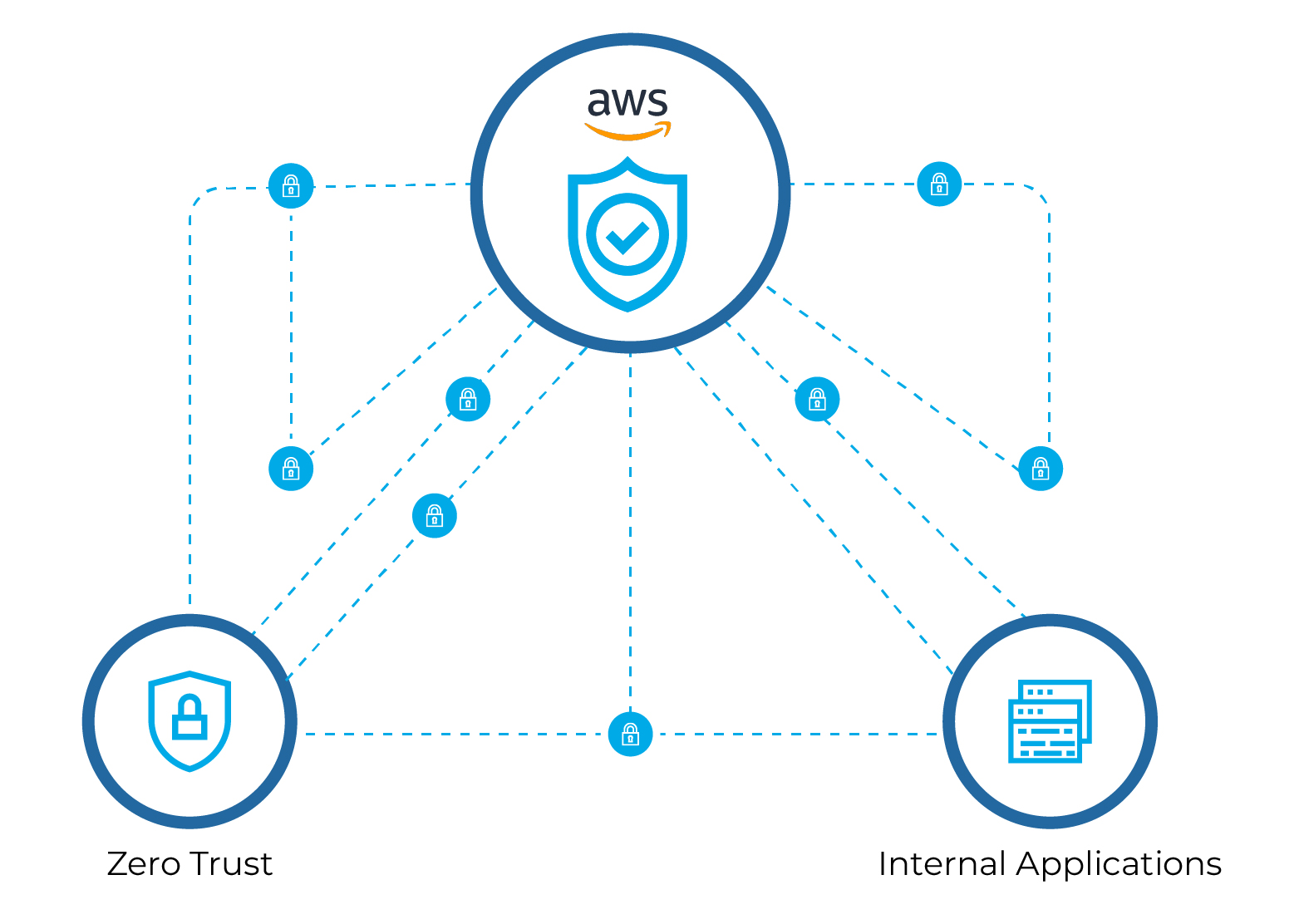
The Challenge with Traditional VPN-Based Access
Traditional VPNs extend corporate network access to remote users, making their devices part of the internal network. While effective for connectivity, this approach can introduce security, management, and scalability challenges.
Network-Level Access
VPN users often gain access to an entire network segment rather than a specific application, making it more difficult to enforce granular access controls.
Risk of Lateral Movement
If a user’s device is compromised, attackers may be able to move laterally across the network and gain access to additional internal resources.
Complex Infrastructure Management
Managing VPN gateways, firewall rules, routing policies, and user access permissions can become increasingly complex as organizations scale.
Scalability Constraints
As the number of remote users grows, organizations may need to continuously expand VPN infrastructure to maintain performance and reliability.
What is AWS Verified Access?
AWS Verified Access is a fully managed service that provides secure access to internal applications without requiring a traditional VPN. Built on Zero Trust principles, it evaluates every access request based on user identity, device posture, and defined security policies. By granting application-level access instead of network-wide connectivity, organizations can reduce their attack surface and strengthen security. For more details, refer to the AWS Verified Access documentation.
When a user requests access to an application, AWS Verified Access verifies identity, validates device posture, and evaluates access policies before granting access. Only authorized requests can reach the application. As organizations adopt Zero Trust security strategies, AWS Verified Access helps protect cloud applications through continuous identity and device verification. To learn more about the service, visit the official AWS Verified Access Product Page.
How AWS Verified Access Works
AWS Verified Access validates every request through the following process:
- A user requests access to an internal application through a web browser
- DNS resolves the application domain, and the request is routed to the Verified Access endpoint
- The identity provider authenticates the user
- Verified Access evaluates identity, device posture, and access policies
- If all conditions are met, the request is forwarded to the backend application. Otherwise, access is denied
This ensures that access decisions are based on identity and security context rather than network location.
Key Components of AWS Verified Access
AWS Verified Access includes several components that work together to provide secure, identity-aware access to applications:
- Verified Access Instance: Central resource that manages access configurations and evaluates incoming application requests
- Trust Provider: Connects identity providers and device posture services for policy evaluation
- Verified Access Group: Organizes endpoints and applies consistent access policies across applications
- Verified Access Endpoint: Represents a protected application and enforces secure access controls
- Access Policies: Define access rules based on identity, device posture, and context
Benefits of AWS Verified Access
In many organizations, AWS Verified Access helps security teams enforce application-level access policies without exposing the entire network to remote users.
- Stronger Security Controls – Validates user identity and device posture to reduce the risk of unauthorized access.
- Application-Level Access – Provides access only to authorized applications, not the entire network.
- Simplified Access Management – Eliminates the need to manage complex VPN infrastructure and policies.
- Improved User Experience – Enables secure access to applications without installing or managing VPN clients.
Comparing AWS Verified Access with Other Access Solutions
AWS provides multiple services for remote access, each designed for specific security and connectivity requirements.
- AWS Client VPN: Provides secure network-level access to VPC resources when users need access to multiple internal systems
- AWS Verified Access: Provides application-level access using Zero Trust principles to restrict users to authorized applications only
- AWS WorkSpaces: Delivers a full cloud-based virtual desktop environment instead of access to individual applications
When Should Organizations Use AWS Verified Access?
AWS Verified Access is ideal for organizations seeking secure access to internal web applications, remote workforce connectivity, and Zero Trust security implementations. It is particularly well-suited for cloud-native environments where application-level access control is required, helping reduce security risks associated with traditional network-based access models.
Conclusion
AWS Verified Access offers a modern Zero Trust approach to securing application access without relying on traditional VPNs. By continuously validating user identity, device posture, and access policies, it ensures that only authorized users can access protected applications. Organizations adopting Zero Trust security can use AWS Verified Access to provide secure, application-level access while reducing the complexity of traditional remote access solutions.